A Psychologically Safe Workplace Is Not Always a Comfortable One
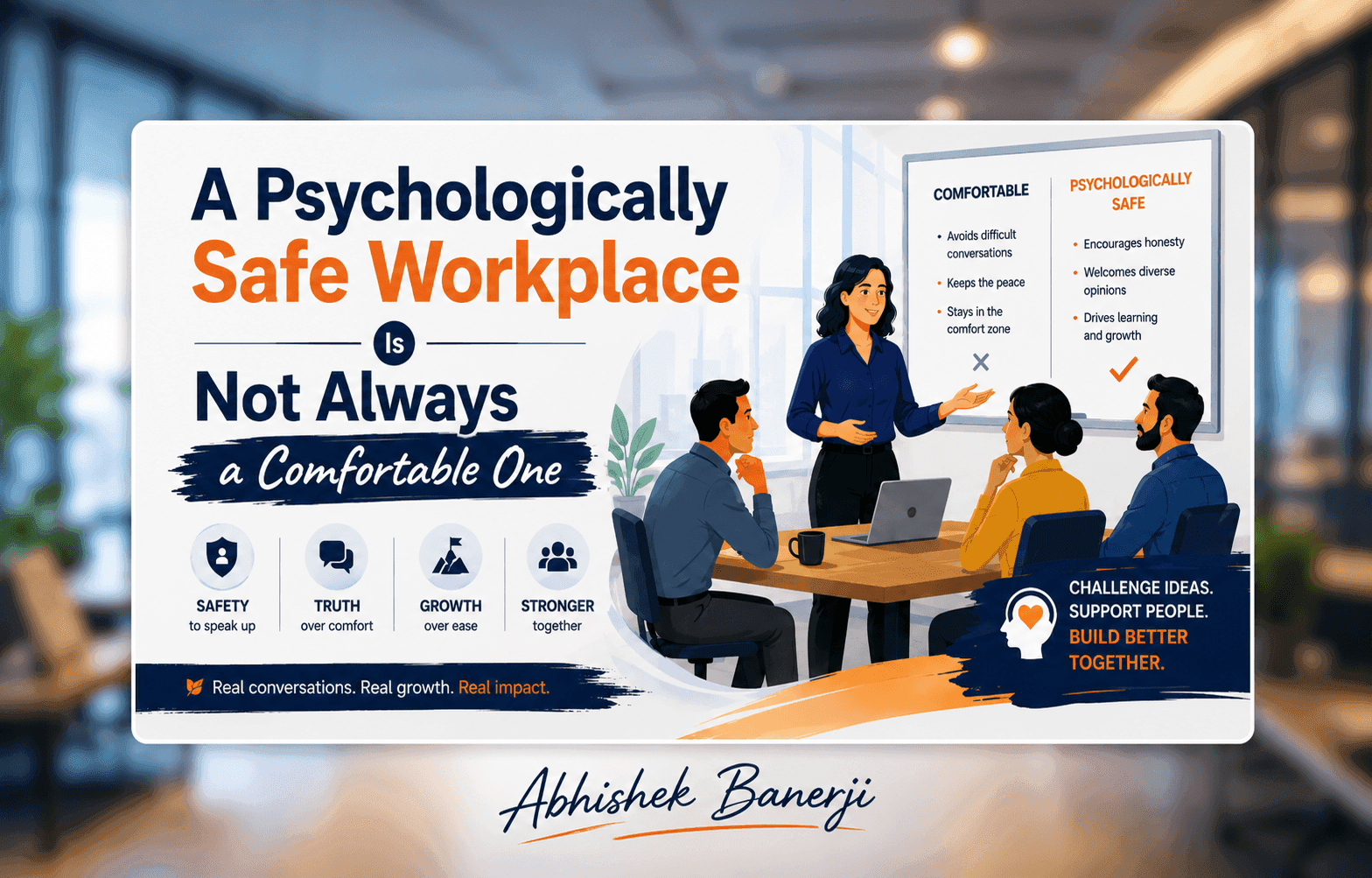
Psychological safety is often understood as a workplace where people feel comfortable. While comfort can be an important part of a healthy environment, psychological safety is not the promise that every conversation, decision, or experience will feel easy.
A psychologically safe workplace is one where people can participate honestly, ask questions, express disagreement, acknowledge mistakes, and raise concerns without fearing humiliation, punishment, exclusion, or damage to their reputation.
At times, doing these things may still feel uncomfortable.
Giving difficult feedback can be uncomfortable. Hearing that our actions have affected someone negatively can be uncomfortable. Admitting that we do not know something, challenging a popular decision, confronting bias, or discussing unequal experiences can also create discomfort.
The presence of discomfort does not automatically mean that psychological safety is absent. Sometimes, discomfort is part of learning, accountability, change, and meaningful dialogue.
The more important question is: What happens to people when discomfort appears?
Comfort and Safety Are Not the Same
Comfort usually means that we feel familiar, relaxed, and relatively free from emotional tension. Psychological safety means that even when tension arises, we still feel respected and able to participate.
A team may appear comfortable because everyone agrees with the leader, avoids difficult topics, and maintains polite relationships. However, beneath that surface, people may be withholding ideas, concealing mistakes, or staying silent about harmful behaviour.
On the other hand, a psychologically safe team may have disagreements, difficult feedback, and emotionally demanding conversations. The difference is that these conversations happen without attacking people’s dignity or threatening their belonging.
Psychological safety does not remove challenge. It changes how challenge is experienced and managed.
Safety Does Not Mean Agreement
In psychologically safe teams, people are not expected to think alike. They are able to disagree without becoming enemies.
A team member can say:
“I see this differently.”
“I am concerned about the impact of this decision.”
“I made a mistake and need support.”
“I do not fully understand. Could you explain it again?”
“I think we may be overlooking something.”
These statements may interrupt the flow of a meeting or challenge the assumptions of people in authority. Yet they often contain the information a team most needs to hear.
When leaders treat disagreement as disrespect, people learn to remain silent. When curiosity replaces defensiveness, disagreement can become a source of insight.
The goal is not to eliminate tension. It is to ensure that tension does not become humiliation, intimidation, or exclusion.
The Difference Between Productive and Harmful Discomfort
Not all discomfort is equal.
Productive discomfort may arise when we encounter a new perspective, receive constructive feedback, recognise a blind spot, take responsibility for an error, or practise an unfamiliar skill. Although challenging, this discomfort can lead to reflection and growth.
Harmful discomfort arises when people are mocked, threatened, repeatedly interrupted, personally attacked, discriminated against, or pressured to tolerate unsafe behaviour. This kind of discomfort does not encourage development. It undermines trust and participation.
Leaders must be careful not to label every negative experience as “growth.” Asking employees to endure disrespect, discrimination, excessive pressure, or emotionally unsafe conditions is not the same as encouraging them to move beyond their comfort zones.
A useful distinction is this:
Healthy challenge stretches a person’s capacity while protecting their dignity. Harmful challenge threatens their dignity, security, or belonging.
Psychological Safety Requires Accountability
Psychological safety is sometimes mistaken for avoiding consequences or making every interaction agreeable. However, safety and accountability are not opposites.
People can be held accountable without being shamed.
A leader might say:
“This decision had a serious impact. Let us understand what happened, take responsibility, and decide how to repair it.”
This is different from saying:
“How could you be so careless? You clearly cannot be trusted.”
Both statements address a problem, but only one protects the person’s dignity and creates the possibility of honest learning.
Without accountability, psychological safety can become superficial politeness. Without psychological safety, accountability can become fear-based control.
Healthy teams need both.
The Leader’s Response Shapes the Culture
Employees learn whether a workplace is psychologically safe by observing how leaders respond in difficult moments.
What happens when someone questions a decision?
How does the leader react when a mistake is revealed?
Are concerns explored or dismissed?
Do powerful voices dominate every conversation?
Are quieter team members invited to participate?
Can a leader acknowledge being wrong?
Leaders may say that they welcome honesty, but their reactions communicate more powerfully than their intentions.
A defensive expression, sarcastic remark, public dismissal, or subtle exclusion can teach a team that speaking honestly carries a cost. In contrast, a leader who pauses, listens, asks questions, and appreciates difficult input demonstrates that honesty is valued.
A simple response such as, “Thank you for raising this; let us look at it carefully,” can significantly influence whether people continue to speak.
Creating Safety During Difficult Conversations
Psychological safety is not created by removing difficult conversations. It is created by holding them with care, clarity, and respect.
This may include:
separating the person from the problem
describing specific behaviour rather than making character judgments
allowing people to ask questions and offer context
making expectations and boundaries clear
acknowledging differences in power
inviting perspectives that may otherwise remain unheard
remaining open to feedback, especially when it is uncomfortable
providing time for reflection when emotions are heightened
focusing on repair and learning, not only blame
Leaders do not need to prevent every moment of discomfort. They need to help ensure that discomfort remains manageable, purposeful, and free from humiliation.
Psychological Safety Is a Shared Practice
Although leaders have a significant responsibility, psychological safety is also shaped by everyday interactions among team members.
It is strengthened when colleagues listen without immediately dismissing one another, give credit fairly, respect boundaries, challenge ideas rather than personalities, and make room for different communication styles.
It is weakened when people gossip, ridicule mistakes, form exclusionary groups, or use vulnerability against others later.
Psychological safety is therefore not a single policy, workshop, or statement. It is a repeated relational practice.
It is built in meetings, feedback conversations, informal exchanges, decisions, conflicts, and moments of repair.
Moving From Comfort to Courage
A psychologically safe workplace is not one where nobody feels challenged. It is one where people do not have to choose between honesty and belonging.
There may still be uncertainty. There may still be disagreement. There may still be moments when people feel exposed, nervous, or emotionally stretched.
But within a psychologically safe culture, people trust that they will be treated with dignity while navigating those moments.
The aim is not constant comfort. It is the creation of enough trust, care, and relational safety for people to practise courage.
Perhaps the most useful question for leaders is not:
“Is everyone comfortable?”
It is:
“Can people be honest here, especially when honesty is difficult?”