Loading...
Insights, stories, and thoughts on leadership, wellbeing, and transformative practices.
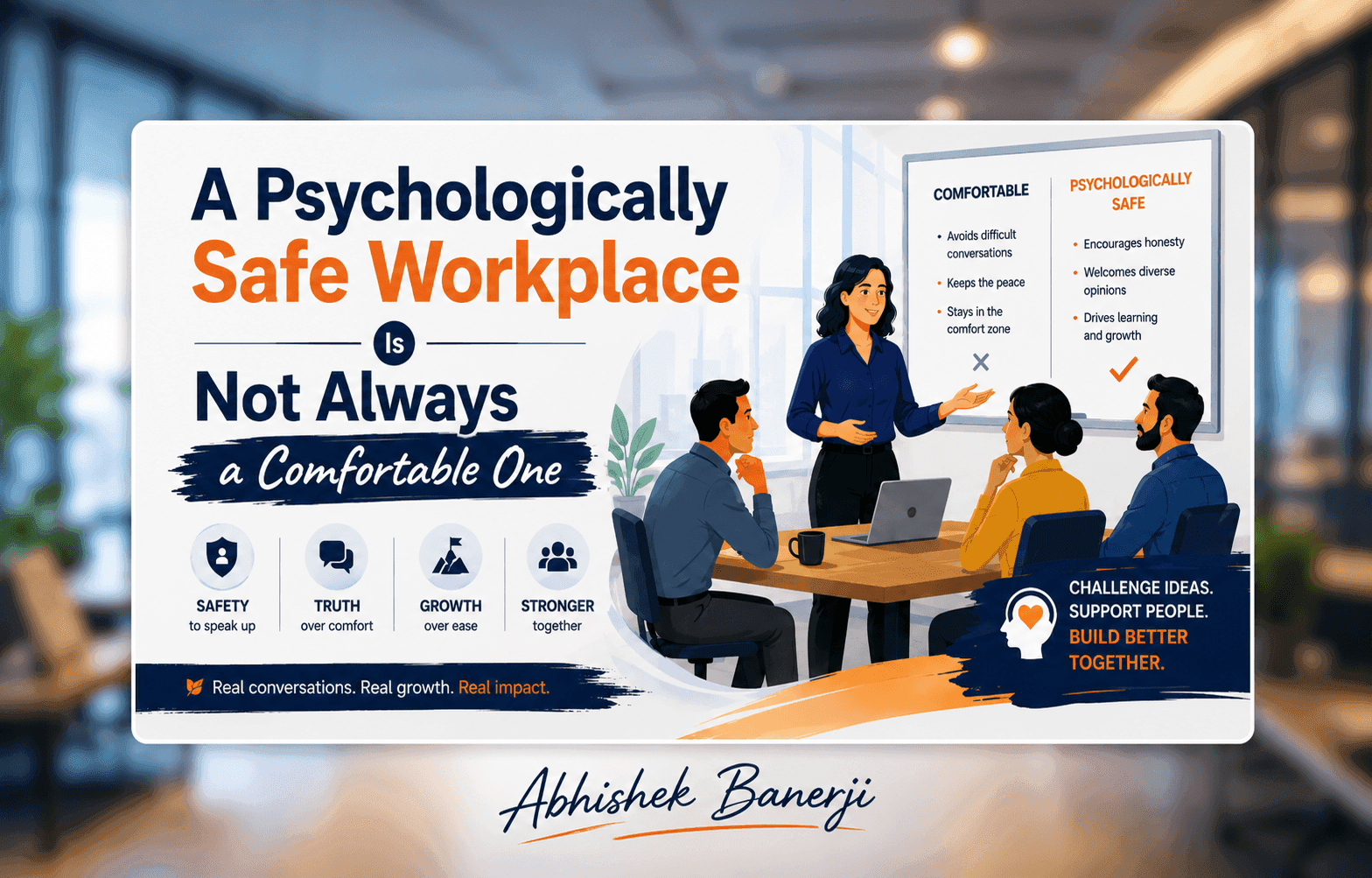
Psychological safety is often understood as a workplace where people feel comfortable. While comfort can be an important part of a healthy environment, psychological safety is not the promise that every conversation, decision, or experience will feel easy. A psychologically safe workplace is one where people can participate honestly, ask questions, express disagreement, acknowledge mistakes, and raise concerns without fearing humiliation, punishment, exclusion, or damage to their reputation. At times, doing these things may still feel uncomfortable. Giving difficult feedback can be uncomfortable. Hearing that our actions have affected someone negatively can be uncomfortable. Admitting that we do not know something, challenging a popular decision, confronting bias, or discussing unequal experiences can also create discomfort. The presence of discomfort does not automatically mean that psychological safety is absent. Sometimes, discomfort is part of learning, accountability, change, and meaningful dialogue. The more important question is: What happens to people when discomfort appears?